Midday dilemma

June 8 to July 16, 2022

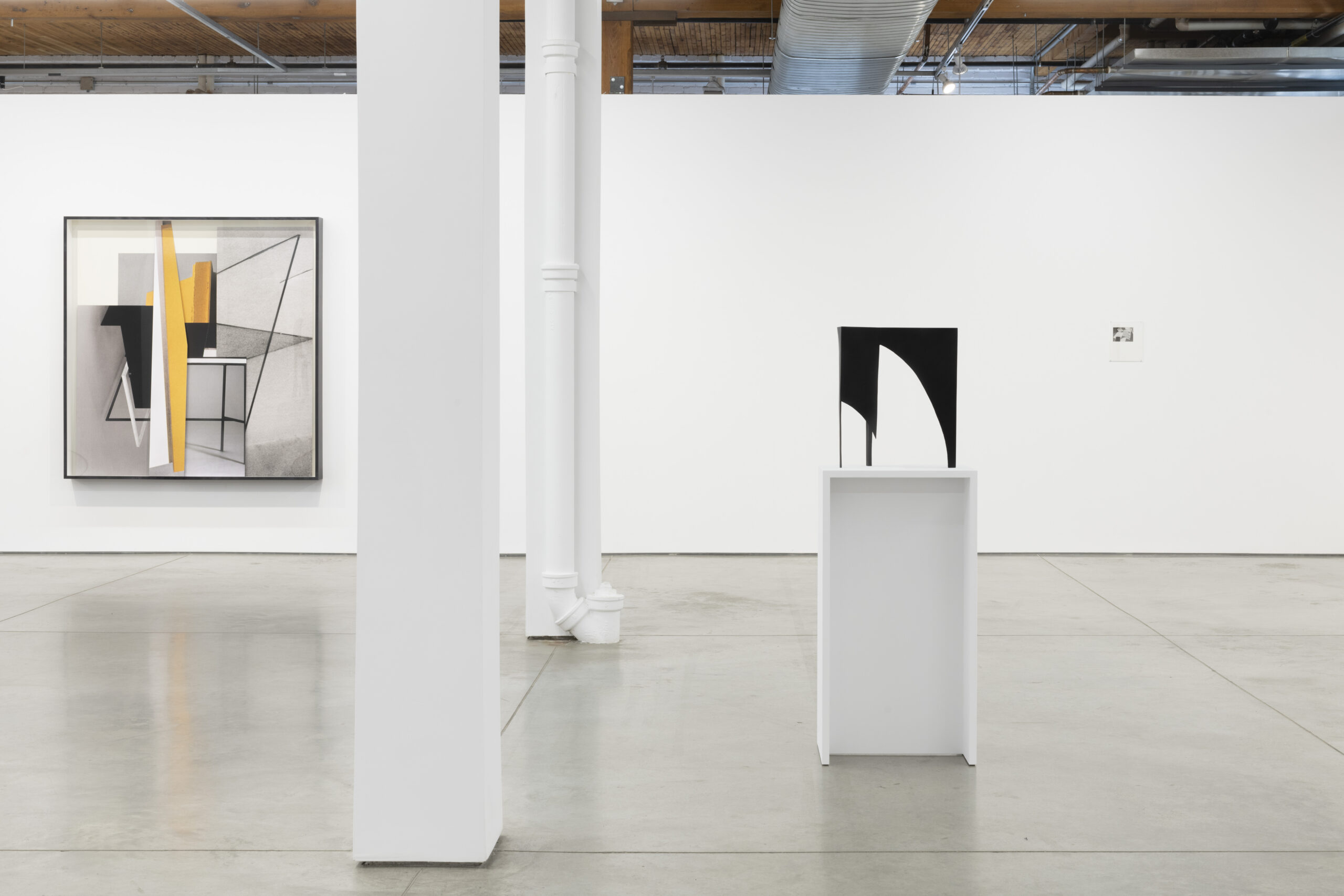
Bradley Ertaskiran is pleased to present Midday dilemma, a solo exhibition of photography and sculpture by Erin Shirreff.

The works on view in the exhibition are each grounded in the visual archive of 20th-century Western art history, a source Shirreff has used either directly or indirectly in sculpture, video, and photography for several years. Shirreff uses this material—images of objects meant for contemplation—not for critique or homage, but to explore our experience of looking and the peculiar expressiveness of objects rendered in two dimensions.

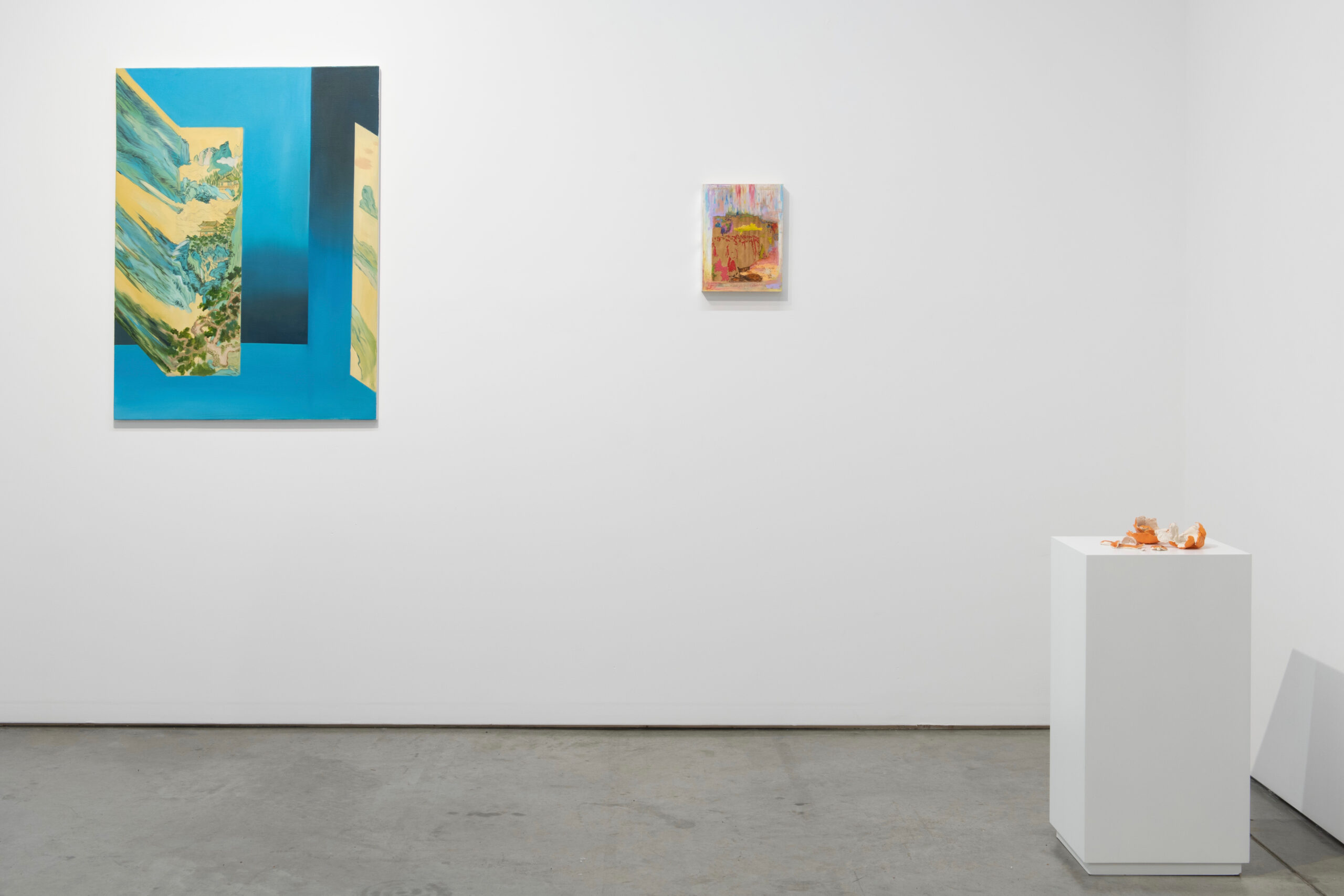
The four wall-based artworks in the show are part collage, part sculptural assemblage. Shirreff scans and enlarges fragments of imagery from art anthologies published decades ago which are then printed on sheets of aluminum, cut into irregular shapes, and set into informal arrangements within large, deep-set frames. The identity of the original objects is left vague. Stronger is the sense of their materiality—the sheen of un-patinated bronze, an imperfect plane of steel, reflected light on glossy resin—even through the veil of half-tone dots or brightly-coloured offset patterning. The layered elements cohere into unlikely compositions that within the vitrine-like structures seem strangely without era or context. Midday dilemma (2022), which shares its name with the exhibition, appears like a self-standing Constructivist memory, built from angled lines, shadowy corners, and planks of mustard yellow. An orange curve lingers suggestively between slanted sheets of steel in Old friend (2022), while a complex structure of wood, stone, and golden brass extends eight feet across in Standing fawn (2021). 

Accompanying these pieces are two bronze sculptures from a body of work Shirreff began in 2019. Each titled Maquette, they are inspired in part by documentation of Mid-Century abstract sculpture and her own curiosity about model-making and expressions of scale. Shirreff uses foamcore and hot glue to improvise three-dimensional structures based on early photo collages or digital composites, endeavouring to translate from screen to space. These handmade models are then sand cast in bronze, a one-to-one process where the dents, seams, and surface incidents of her studio materials are faithfully traced in metal, and then overlaid with a deep black patina. Encountering Shirreff’s sculptures in the round, they unfold and recede with each vantage point, be it the bisecting triangular planes of Maquette (A.P. no. 10) (2019)or the exaggerated sickle-like silhouette of Maquette (double curve) (2022). At a distance, they exude a familiar sculptural austerity but on closer inspection, they are revealed as delicate, makeshift propositions. They’re also revealed as casts, ghosts of an absent original—casting and photography are twin processes in this respect. As is often the case in her work, Shirreff’s Maquettes pivot on notions of unknowability and incompletion, both inherent to the artist’s perpetual translations of image to object and back again.

Conversation between Erin Shirreff and Mark Lanctôt: Join us for a discussion between Erin Shirreff and Mark Lanctôt, Curator at the Musée d’art contemporain de Montréal on Saturday, June 18 at 1pm. The talk will be followed by conversation and refreshments; the event is free and open to all. This event is presented as part of Gallery Weekend, organized in collaboration with The Contemporary Art Galleries Association (AGAC).

To consult Erin Shirreff’s artist profile, click here.


Papier

August 26 to 28, 2022

VIP : August 25th from 6pm to 9:30pm
Public Hours: August 26 to 28

Grand Quai du Port de Montréal
200 de la Commune Ouest

Booth B05

Bradley Ertaskiran is proud to participate at Papier contemporary art fair, from August 26th to the 28th, with new and recent work by David Armstrong Six, Mathieu Beauséjour, MMD x CPS, Kim Dorland, Jessica Eaton, Luce Meunier, Aude Moreau, Shaan Syed, and Janet Werner.

Represented artist Karen Kraven will present a new solo project supported by AGAC’s partnership with La Maison Simons. We are also proud to support emerging artist Dexter Barker-Glenn’s in a special project created for the fair.

To consult the Papier website, click here.

The Armory Show

Veronika Pausova

September 9 to 11, 2022
Javits Center, New York
Booth P8

Bradley Ertaskiran is delighted to be participating in The Armory Show, New York from September 9 to 11, 2022 with a solo presentation of new works by represented artist Veronika Pausova. 

Pausova’s oil paintings are theatrical assemblages played out by unexpected characters: lacquered fruit flies and spiders, powdery moths, droopy flowers, disembodied toes, fingers, and ears. Funny and captivating, the unique actors populating her paintings are each rendered with exceptional skill and control, as she combines hyper-realistic precision with experimental paint applications like soaking the canvas with imbibed sponges and fabric. Pulling and leaping across the canvases, Pausova’s human and non-human entities are united by trajectories of their own making—hands grasping their own frame, gangly legs galloping away, a nipple held onto the canvas with but a thread—which together illustrate a captivating story unfolding before us, and without us.

To consult The Armory Show’s website, click here.

To consult Veronika Pausova’s artist page, click here.

Press: Jacoba Urist, “Which Artists to Watch in Cultured ‘s Armory Show Market Report,” Cultured, September 14, 2022.

Laps

April 28 to May 28, 2022

Bradley Ertaskiran is pleased to present Laps, a duo exhibition featuring Gabriele Beveridge and Carlos Reyes. 

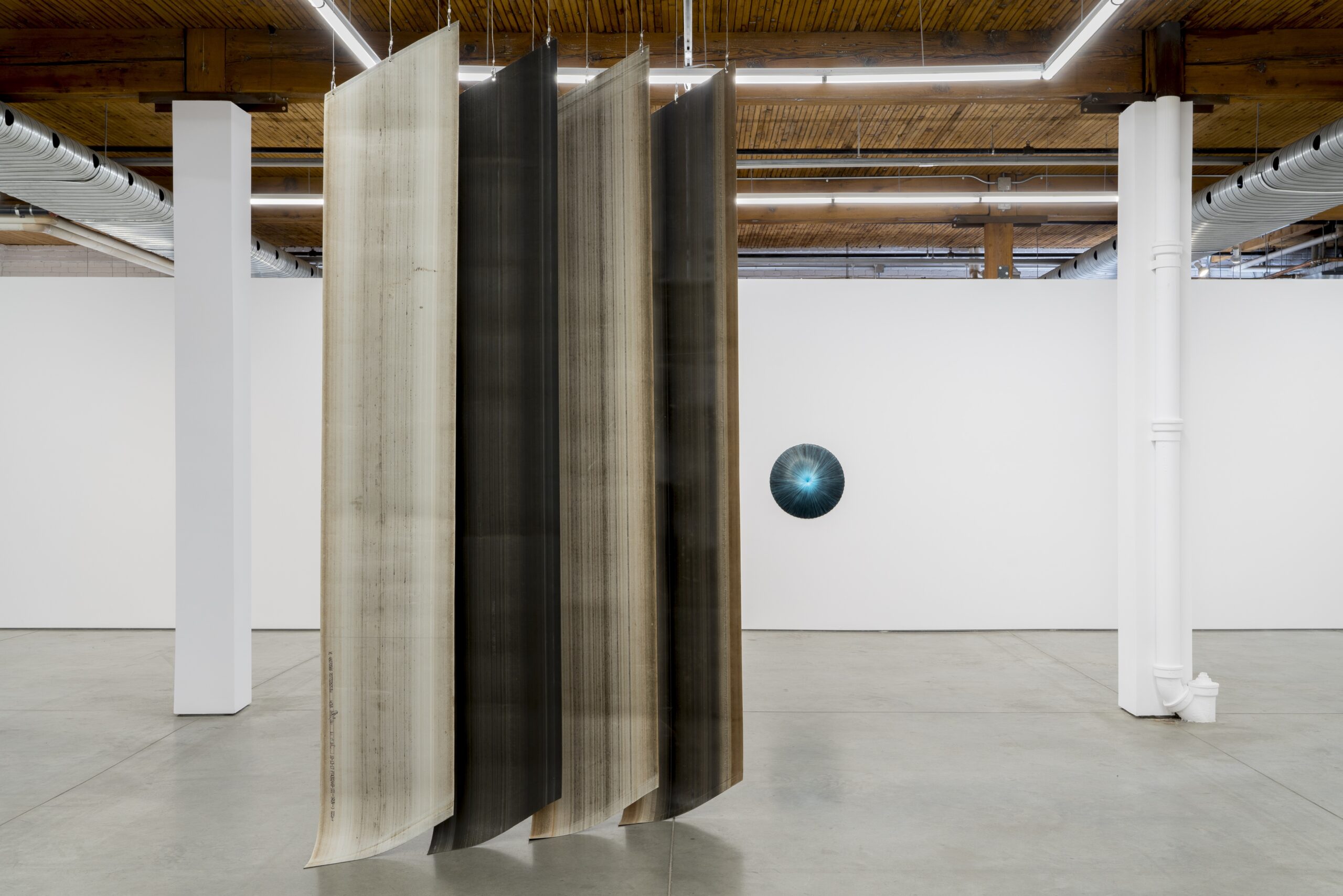
When considering how Beveridge and Reyes’ artworks fit, flow, or move together, there is something unnameable at work, a feeling, a pull, an energetic sensation, a transfer from one form to the next. In Laps, this circulation of energy is abundant and palpable, from the very start of the making process, as in the case of Beveridge’s active glass-blowing method, to the end of an objects’ life, as with Reyes’ use of found materials, exhausted from human interaction. What’s more, the presented artworks manifest traces of imparted movement, electricity, and time, showing how human and mechanical energy actively transforms glass, metal, and fabric into something new, or passively wears them out altogether.

Beveridge’s combinations of materials and organic forms recall the rhythm and tension of bodies in motion: from the cyclical breaths needed to create glass-blown artworks, to the repetitive gestures of pulling and tightening used to shape her hair sculptures. In her installation Lattice (2022), hand-blown glass orbs rest precariously on a grid of hooks, their organic forms softening against the jarring metal appendages, evoking a heightened sensitivity; the luscious pink glass beckons us closer, but we hold our breath as if a mere exhalation or movement would alter it indefinitely. Throughout her Orbit series, synthetic hair is stretched across a tapered disk, the result tense and elegant, like motion halted in time. If Beveridge’s sculptures elicit a palpable presence, then her Lightpool photograms are rooted in an absence; the abstract circular flesh-coloured shapes show imprints of glassware, a tactile trace left behind.

Harnessing found objects, Reyes’ work carries the mechanical traces of human life and passing time, notably his series Sarah (2022), made of sun-faded jewellery displays from a decommissioned jeweller in New York. An accidental photogram, the red velvet-lined panels carry the bleached impressions of chains, hoop earrings, and other wearables, relics of bygone commerce and labour. In Reyes’ installation Untitled (2022), large rubber treadmill belts cascade from the ceiling; on one side, the manufacturer’s trademark, and on the other, the embossed skid marks from bodies and machines in motion. Reyes’ sculptures are discarded fossils of human energy: materials and objects that have absorbed the long-term effects of sweat, brute force, and expelled electricity, only to be deemed useless and in their lifeless states, thrown away.  

In Reyes’ sculpture PROMESA (2022), suspended twin lamps fused at their lampshades show lights fluctuating at different brightnesses and speeds, each monitoring the live power usage and electrical discrepancies of Puerto Rico and Montreal, respectively. Here, Reyes’ exhausted, pulsating lights visualize bodily currents in the form of real-time power surges and shortages. Together, Beveridge and Reyes’ varied sculptures manifest controlled and expelled energy, flowing from body to object, object to body.


To consult Gabriele Beveridge’s work, click here.
To consult Carlos Reyes’ work, click here.

Exhibited artworks by Carlos Reyes courtesy of Derosia, New York. Carlos Reyes, PROMESA (Laps) (2022): Design engineering by Sam Wolk.

Last Call
Curator: Danny Báez

March 16 to April 16, 2022

Obi Emmanuel Agwam
Dante Cannatella
Kim Dacres
Larissa De Jesús Negrón
Azza El Siddique
Melissa Joseph
Joiri Minaya
Preston Pavlis
Bony Ramirez
Ana Villagómez
Cyle Warner
Areum Yang

Bradley Ertaskiran is pleased to present Last Call, an exhibition curated by Danny Báez, which brings together the work of twelve artists: Obi Emmanuel Agwam, Dante Cannatella, Kim Dacres, Larissa De Jesús Negrón, Azza El Siddique, Melissa Joseph, Joiri Minaya, Preston Pavlis, Bony Ramirez, Ana Villagómez, Cyle Warner, and Areum Yang.

Throughout his artistic projects, New York-based curator Danny Báez has spent years cultivating a community of emerging artists. In many ways, Last Call reflects Báez’s unique mandate as a facilitator rather than influencer or gate-keeper of art: that art networks should be rooted in community rather than prestige, and exhibitions built on integrity and mutual support. This focus on collaboration is a radical one because it highlights what the traditionally exclusionary art world often forgets: that the art world is nothing without its artists and that the unseen networks of support between artists, art workers, and their work should be nurtured and celebrated. 

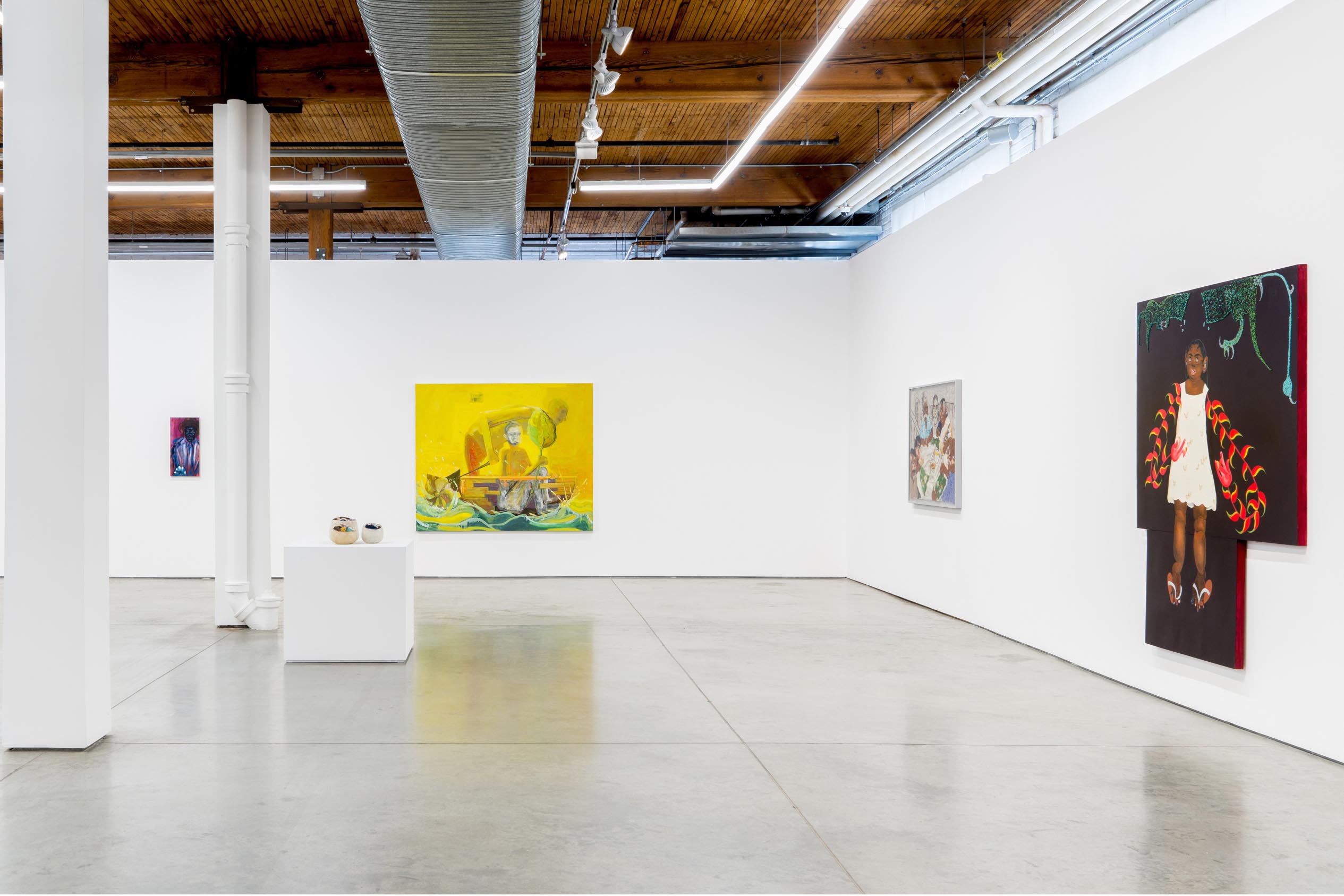
For this exhibition, twelve artists answered Báez’s metaphorical call, offering artworks that are deeply textured, storied, and critical of tradition. In some works, portraiture is revisited through the lens of personal identity. Bony Ramirez’s highly-stylized paintings are treasure troves of personal, religious, and everyday symbols from his Dominican upbringing. Obi Emmanuel Agwam’s portrait is a whirl of dynamic imagery, offering humour, joy, and pride. So too, Preston Pavlis depicts vulnerable and emotional figures through gestural and moody paint strokes. Joiri Minaya’s photographic collages both conceal and merge figures with their decorative, camouflaged backdrops.

In other paintings, reactive abstract scenes offer glimpses into the artists’ inner and outer worlds. Dante Cannatella’s painting is a landscape in flux, as blurry figures seem pulled by the whims of a powerful force. Raw, painterly gestures comprise Areyum Yang’s lively scenes, full of colour, repetitive marks, and emotion. Ana Villagómez’s paintings reveal her process; many layers of paint fragments are scrubbed and erased into a coexisting whole. Surreal and expressive, Larissa De Jesús Negrón’s paintings show hazy scenes of distorted figures, skewed interiors, and objects, a dreamlike state that is both alluring and anxious. 

In the exhibition’s sculptural works, history’s plasticity is reimagined through novel materials. Kim Dacres meticulously constructs commanding and regal portrait busts out of found rubber and tire. Cyle Warner’s large-scale textiles are assemblages from his family archive; found fabric, paint, and paper woven into vibrant, layered flags of sorts. Azza El Sidique experiments with metal and rust, reimagining the capabilities of a material typically assigned to noble bronze monuments or iron edifices. Melissa Joseph’s detailed felted sculptures show nostalgic and everyday scenes of togetherness, materializing people and place.

“Last Call!”—the final announcement made at the end of an evening before the bar closes. Báez invites us to see this moment not as an end, but as a reminder to look around, and see who stuck beside us in the final hours. Last Call offers a glimpse into Báez’s art ecosystem, because in the art world as much as in our every day, community and connection matter.

Independent

Joseph Tisiga

May 5 to 8, 2022
Spring Studios, 50 Varick Street, New York

Bradley Ertaskiran is delighted to be participating in Independent Art Fair, New York, with new artworks by Joseph Tisiga.

Tisiga’s collection of watercolour paintings and mixed-media works, all made specifically for the fair, will be paired with intricate beadwork sculptures made by his mother, Sally Tisiga. Typical of Tisiga’s narrative style, his painted and assembled scenes are rich in detail and scope, showing stories of figures in fantastical settings nuanced with humour and obscurity. Together, his works combine urban and First Nations lore to reflect upon the real and imagined histories that construct notions of individual and collective identity.

To consult the fair’s website, click here.

Click here to visit Joseph Tisiga’s artist page.

Pelures

January 20 to February 26, 2022


Bradley Ertaskiran is pleased to present Pelures, an exhibition featuring Berirouche Feddal and Florence Yee. 

Drawing on imagery from historical archives and personal anecdotes, Berirouche Feddal traces his Amazigh origins, manipulating the past anew. Wood, photographs, book pages, and detritus are etched, cut, and even burned, then layered with generous, vibrant colour. Feddal is constantly removing and reapplying layers of materials, a process that mimics how memory is passed down through generations, added to and shaped, an accumulation of fragments over time. Feddal’s multidisciplinary work is unconcerned with historical accuracy or easy-to-read narratives, bridging the past with the present suffices. In manipulating some elements, he reveals others.

Legibility is a facet of Florence Yee’s work as well. Second-generation Cantonese, Yee creates text-based artworks to play with and disrupt exclusionary conventions of language and imagery. Words are embroidered across printed cotton photographs, paintings are unfocused and distorted, removing information and obstructing the blurry images behind them. Without prioritising narrative or linguistic signifiers, Yee’s work values instead the indecipherable or the unreadable, a gesture that is defiantly aware of how language can be used to define, exclude and erase diasporic communities.

What’s more, the words across Yee’s printed photographs act as a watermark of sorts, recalling a sense of ownership or property claim, like those stamped on mass-circulated digital images or found on the underbelly of commodified goods. Yee reminds us that racialized identity and culture are equally commodified, tokenized images and bodies exploited across commercial, public, and online spaces.

Meticulous in their creation, Yee and Feddal’s work are evidence of labour and care, not only in their physical acts of making (Yee’s hand stitches or Feddal’s layers of paint and pastel) but also in the time spent engaging with images and language of their cultural legacies.

Born in the mountainous region of Kabylia, Algeria Berirouche Feddal is a multidisciplinary artist currently based in Montreal. Feddal’s work has been presented at FOFA Gallery (Montreal), Conserverie Marrakech, Maison de la culture de la Rivière-des-Prairies (Montreal), and Stewart Hall Art Gallery (Montreal).

Florence Yee is a visual artist based in Toronto and Montreal. Yee’s multidisciplinary work has been exhibited at the Museum of Contemporary Art Toronto, the Art Gallery of Ontario (Toronto), the Textile Museum (Toronto), and the Gardiner Museum (Toronto). Often drawing on collaboration and community in their practice, Yee co-founded the Chinatown Biennial in 2020, a multi-site project aimed at engaging with the wealth, power, and colonial legacy of international cultural events.

To consult Berirouche Feddal’s work, click here.
To consult Florence Yee’s work, click here.


Kim Dorland, Landscapes, Colour and a Portrait

January 20 – February 26, 2022

Bradley Ertaskiran is thrilled to present Landscapes, Colour and a Portrait, a solo exhibition by Canadian painter Kim Dorland. The exhibition features a collection of new paintings that reflect Dorland’s experimental approach, creating scenes made of a buildup of thick layers of oil paint in vibrant pigments, whose effect is above all visceral.

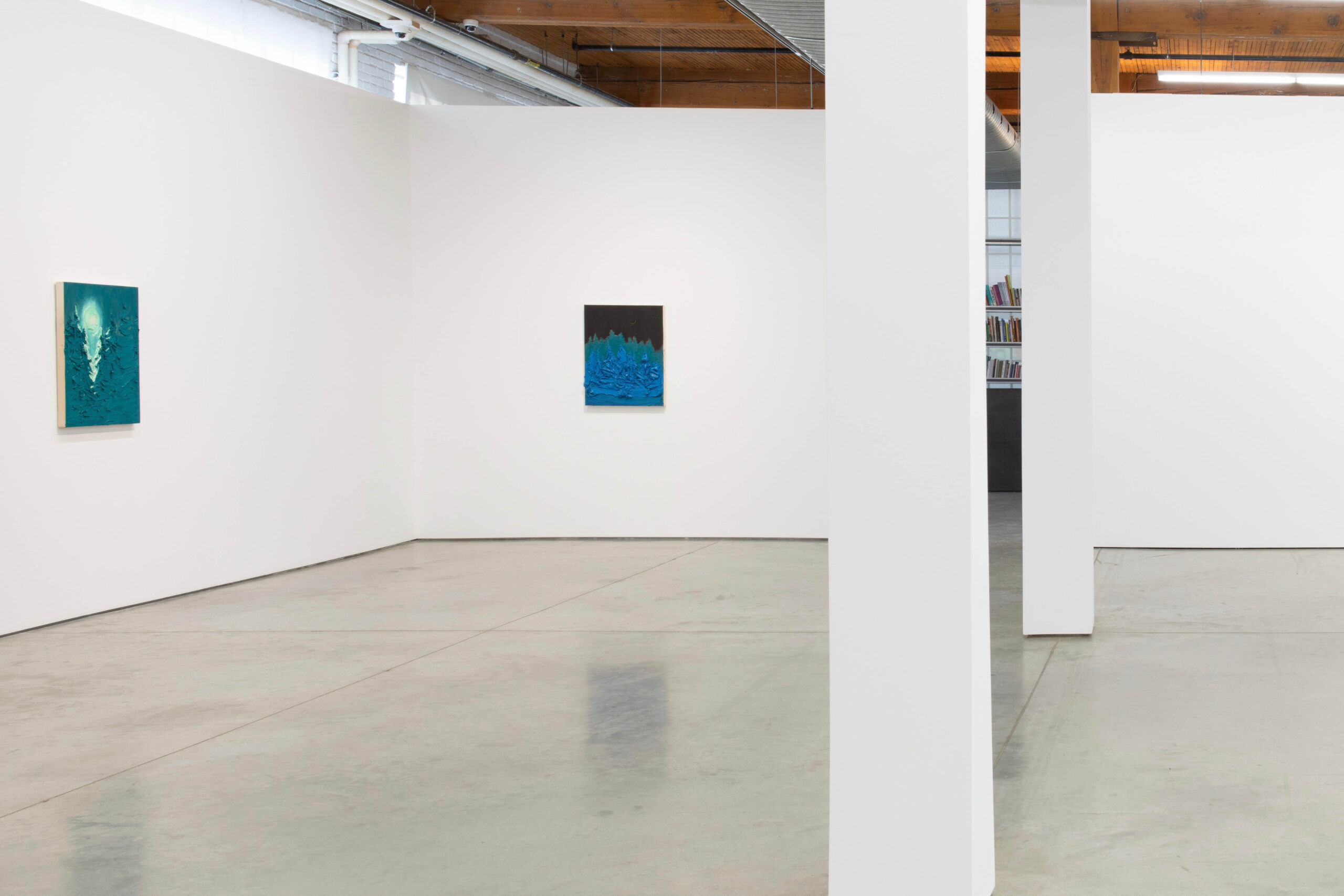
Dorland’s landscape paintings are a testament to the artist’s dedication to colour. Dorland explores the way one saturated hue interacts with another, tipping the scales between jarring and harmonious, always eliciting a certain ambiance. White gluttonous paint strokes turned trees are stacked atop a bright pink background that hums and vibrates like a fluorescent light. Billowing ominous smoke swells across an orange sky, the smell of singed debris hanging in the air. Dorland’s landscapes are not a distinct place or setting; they are about the tension in the act of viewing, the aura exuded from colour, depth, and texture.

Yet despite this aversion to realism, Dorland’s landscapes reflect the tension of the moment, harnessing the global shift from climate emergency as a mere worry to a tangible reality. If the job of Master Landscape Painters of the past—Tom Thomson, Emily Carr, both influential to Dorland—was to reflect nature to the viewer as-is, in all its unalterable majesty, what is the contemporary painter’s role against today’s environmental realities? To paint things as they are changing, the stark image of a world ablaze, or to reference what once was or could be? 

For Dorland, the effects of a changing world are implicit in his landscapes; they are neither comforting, nor a call to action, not hopeful, but not perilous. Dorland’s paintings do not attempt to depict a finished thought or mission, but rather portray the artist’s broad, messy concerns for a turbulent time.

Kim Dorland was born in Wainwright and lives and works in Toronto. Dorland has exhibited extensively throughout Canada and internationally. Solo exhibitions have been presented in cultural institutions such as the McMichael Canadian Art Collection (Vaughan), the Contemporary Calgary and the Museum of Contemporary Art Denver. Dorland’s work is found in public and corporate collections including Montreal Museum of Fine Arts, Montreal Museum of Contemporary Art, Blanton Museum of Art (Austin), The Glenbow Museum (Calgary), Museum of Contemporary Art San Diego, and numerous private collections in Europe, the United States and Canada.

To consult Kim Dorland’s profile, click here.

>